
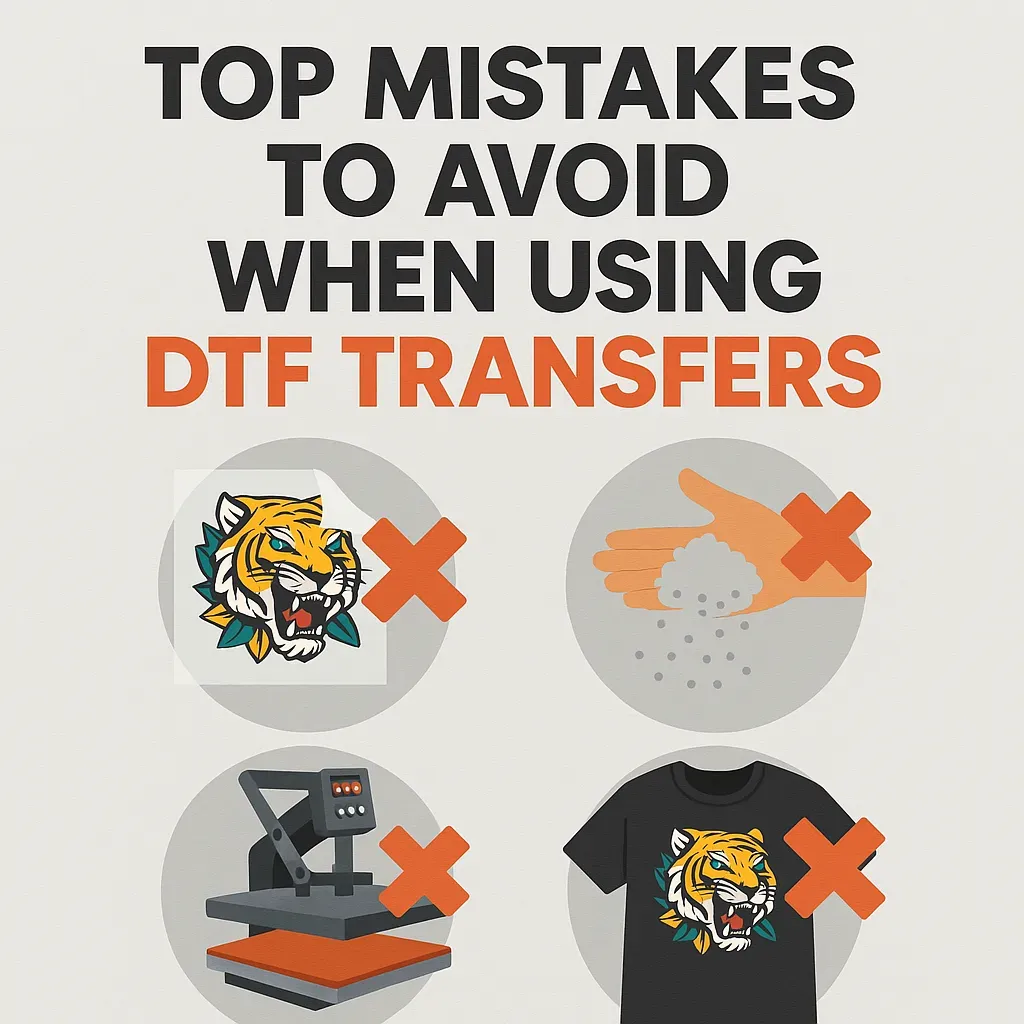
California DTF mistakes can slow production and erode client trust, even when a shop has great equipment. Understanding these common issues—such as DTF printing mistakes, subpar color management, and misaligned settings—lets shops implement DTF workflow best practices and start reducing waste. This guide includes practical DTF printing tips California and actionable steps to how to avoid DTF errors across substrates. From substrate prep to press calibration, mastering these California DTF printing techniques helps deliver consistent results. With clear QA steps and a repeatable process, you’ll keep color accurate, materials intact, and customers satisfied.
Seen through a broader lens, these challenges are not just 'California DTF mistakes' but common missteps in digital transfer printing that affect adhesion and durability. Think of them as transfer-film compatibility issues, improper substrate prep, and color-management gaps that quietly undermine image clarity. Addressing them with systematic guidelines—such as standardized material choices, calibrated presses, and repeatable QA checks—embodies the kind of DTF workflow optimization that printers rely on. By framing the problem in these terms, California shops can map prevention steps to specific stages of the print-to-finish process and communicate quality more effectively with clients.
Master Substrate Prep: The Foundation to Avoid California DTF Mistakes
Substrate prep is the quiet but critical first step in successful DTF printing, and it matters particularly in California where humidity shifts and fabric finishes vary widely. When moisture remains in the fabric or the surface isn’t flattened, adhesion can suffer, colors can appear dull, and transfers may lift or crack after washing. Treat pre-press as a non-negotiable part of the workflow to prevent these California DTF mistakes from creeping into your orders.
To avoid these issues, start with a quick substrate audit: check for uniform texture, wrinkles, and moisture, and run a test on the exact heat and pressure you’ll use for production. Pre-press each item for 5–10 seconds with a clean, dry press, then flatten hems and seams so the transfer makes even contact.
Use a clean, non-stick surface and a silicone sheet when appropriate to avoid residue transfer. Perform a small adhesion test on a sample blank before committing to a batch; if it fails, tweak the dwell time, temperature, or press pressure, and re-test. Regular press calibration and consistent dwell times help ensure the substrate is prepared identically across jobs, reinforcing DT F workflow best practices.
Standardize Adhesive, Film, and Alignment to Prevent Ghosting
Ghosting and misregistration often stem from a mismatch between adhesive, film, and substrate. In busy California shops, variations in film batches and feed path can destabilize grip and alignment, leading to blurred colors or double images—classic DTF printing mistakes.
Standardize adhesive and film brands for each job type, and maintain a small sample library to compare results quickly. Validate alignment before producing a full run by printing test sheets to confirm registration and color layering, especially on designs with multiple color passes.
Check film tension, feed path, belts, rollers, and platen alignment monthly. Record exact settings (temperature, dwell time, pressure) for each adhesive/film combination and reuse them for repeat orders to sustain consistency—an essential component of DT F workflow best practices.
Color Management and Calibration for Consistent DTF Results
Color management is the heartbeat of reliable DTF results. Inconsistent color can stem from uncalibrated monitors, incorrect ICC profiles, or poor color separation. Without good color management, even a correctly prepped substrate can yield disappointing results, which harms customer trust and your reputation in the California market.
Calibrate monitors with hardware tools and use consistent lighting in your workspace to assess color accurately. Use ICC profiles supplied by your printer or ink manufacturer and ensure these profiles match your substrate and printing conditions. Convert artwork to the correct color space before processing, plan for white underbase where needed, and manage color layers deliberately to maintain brightness and saturation.
Run color-check panels and set up a small QA sheet for quick comparisons on every job. Regularly review your color workflow as part of your DTF workflow best practices; update profiles when you switch fabrics or inks to keep color drift in check.
Consistent Heat Press Protocols: Temperature, Pressure, and Cure
Heat press settings are a primary driver of durability and feel. Inconsistent temperatures, pressure, or dwell times can create issues like film cracking, poor adhesion, or tackiness after washing. This mistake is common when shops switch between items, films, or employees without a clear, repeatable setup.
Create a standard operating procedure (SOP) for heat press settings by film type, substrate, and color depth. Include target temperature, dwell time, and pressure, and regularly check and calibrate your heat press with a reliable thermometer to maintain platen temperature consistency across jobs.
Use a silicone sheet and appropriate teflon sheets to ensure uniform heat transfer and prevent scorching or sticking. Build in a curing phase after transfer—allow items to cool on a flat surface and avoid stacking until fully set. Run a few test prints when changing any variable (film, adhesive, substrate) and document the new settings for future orders.
Rigorous QA and Test Runs: The Cornerstone of Reliable DTF Production
In a fast-paced environment, skipping test runs and QA checks is a frequent source of defects. A robust QA process catches issues early and protects your reputation, especially when serving diverse California clients with varying needs.
Build a standard pre-production checklist that includes substrate inspection, pre-press validation, color checks, and a small test strip for every new order or material batch. Print and cure a tiny batch to confirm adhesion and color before ramping up production.
Implement a simple QA protocol to check registration, color accuracy, adhesion, and wash durability for at least one sample per batch, and maintain a log for future reference. Train staff to halt production if something looks off—this discipline is a core part of DT F workflow best practices.
Frequently Asked Questions
What are the most common California DTF mistakes related to substrate prep and pre-press, and how can I avoid them?
In California, common DTF mistakes in substrate prep include moisture in fabrics and uneven texture that impair adhesion. To avoid them: inspect blanks for uniform texture and dryness, pre-press each item for 5–10 seconds on a clean surface, use a silicone sheet when appropriate, run a small adhesion test before batching, and calibrate the press to maintain consistent dwell times. These steps are part of solid DTF workflow best practices.
How do I prevent ghosting or misregistration in California DTF printing caused by wrong adhesive or film, and what steps are part of DTF workflow best practices to prevent this?
Ghosting and misregistration often come from adhesive/film mismatches or tension/registration drift. To prevent this, standardize adhesive and film brands for each job, maintain a small sample library, validate alignment with test sheets, verify film tension and platen alignment monthly, and record exact settings for repeat orders as part of DT F workflow best practices.
Why is color management critical in California DTF printing, and how can I set up calibration and ICC profiles to avoid DTF errors?
Color management is essential for consistent results across California clients. To avoid DTF errors, calibrate monitors with hardware tools, use ICC profiles matched to your printer, substrate, and inks, convert artwork to the correct color space, apply white underbase when needed, and run a color-check QA sheet to catch drift early.
What impact do inconsistent heat press settings have on California DTF mistakes, and how can I standardize this as part of DTF workflow best practices?
Inconsistent heat, pressure, or dwell times can cause adhesion issues and uneven finishes. Standardize with an SOP by film and substrate, keep a calibrated thermometer, verify platen temperature, use silicone or teflon sheets, allow items to cool before handling, and run a test print whenever you change variables as part of DTF workflow best practices.
Why is skipping test runs and QA checks a common California DTF mistake, and what QA checklist should I use for reliability in DTF printing tips California?
Skipping pre-production tests leads to defects across California orders. Implement a QA checklist that includes substrate inspection, pre-press validation, color checks, adhesion tests, and a small sample for each batch; document results to support DTF workflow best practices and reduce costly returns.
| Mistake | Root Causes | Consequences | Preventive Actions |
|---|---|---|---|
| Mistake 1: Skipping thorough substrate prep and inadequate pre-press | Substrates vary by weight/finish; moisture; rushed pre-press | Poor adhesion, ghosting, dull colors | Inspect blanks; test pre-press; 5-10 seconds pre-press; clean surface; silicone sheet; adhesion test; calibrate press; maintain consistent dwell times |
| Mistake 2: Using the wrong adhesive, wrong film, or misalignment leading to ghosting or misregistration | Mixing film types; incompatible adhesive; tension/registration drift | Ghosting, misregistration, color separation issues | Standardize adhesive/film brands; test sheets; verify alignment; check tension/belts/platen; record settings; implement quick-change system |
| Mistake 3: Poor color management and lack of proper calibration | Uncalibrated monitors; improper ICC profiles; wrong color spaces | Color drift, trust issues; inconsistent results | Calibrate monitors; use ICC profiles; convert color spaces; use white underbase when needed; run QA color-check sheets; review workflow |
| Mistake 4: Inconsistent heat press settings and curing | Different substrates/films require different settings; inaccurate temps; improper pressure/time | Film cracking, poor adhesion, tackiness after washing | Create SOP per film/substrate/color depth; calibrate heat press; use silicone/teflon sheets; include curing phase; test when changing variables |
| Mistake 5: Skipping test runs and QA checks | Time pressure; new materials not tested; inconsistent inspection | Defects and returns | Pre-production checklist; small test batch; QA protocol; trained staff; log and learn from results |
Summary
California DTF mistakes are common but highly preventable when shops adopt structured workflows that address substrate prep, adhesive/film selection, color management, heat transfer consistency, and QA checks. The key is to standardize processes: perform thorough substrate prep, maintain a small adhesive/film library and alignment checks, calibrate color workflows, and implement repeatable heat press settings and curing. A simple pre-production checklist, regular equipment calibration, and a documented QA protocol help catch issues before batches are produced, reducing waste and returns. Emphasizing testing and iteration, along with ongoing staff training, helps California print shops deliver reliable color fidelity and durable transfers across varied fabrics and orders. In practice, following these steps turns the five common mistakes into manageable variables, enabling faster production without sacrificing quality. The result is a more scalable DTF workflow that meets the pace of California clients and builds lasting trust through consistent, high-quality results.