
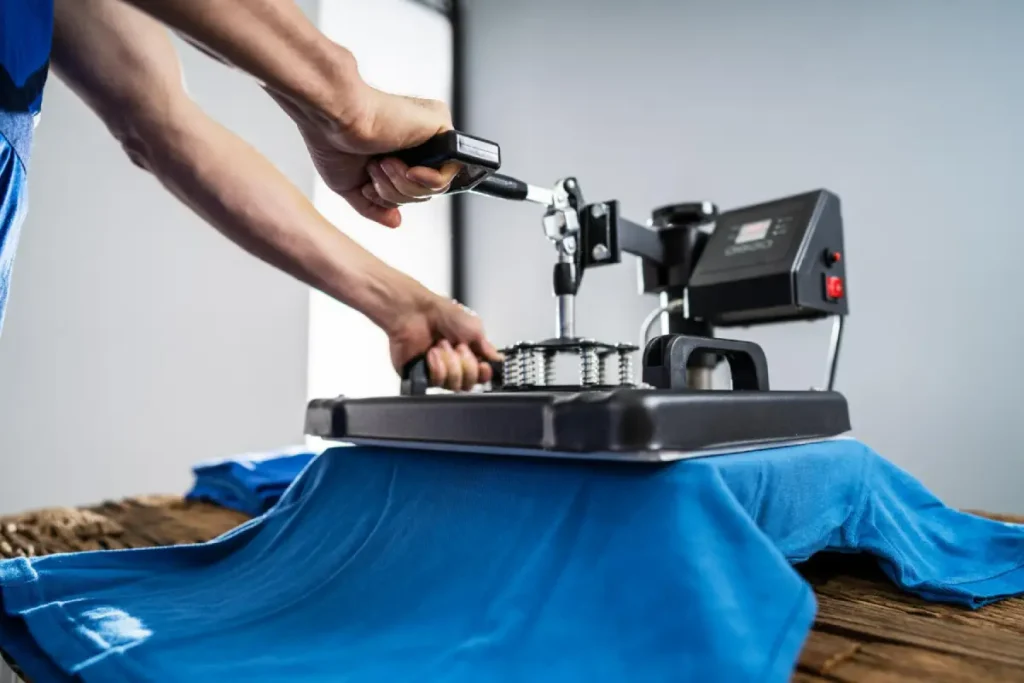
The apparel industry is currently witnessing a paradigm shift where the “craftsman” model is being aggressively replaced by the “industrial-systems” model. As the barrier to entry for dtf printing falls, the market is becoming flooded with low-durability output. To secure a premium position in this environment, your production floor must evolve into an Automated Quality Hub. The objective is no longer to just print a design—it is to optimize the physics of the bond between a polymer adhesive and a textile fiber.
High-end retail success is predicated on the “invisible” quality of a garment: its ability to undergo repeated stress without degradation. When you use high-performance dtf transfers, you are essentially deploying an engineered composite. If your application parameters—PSI, thermal recovery, and moisture regulation—aren’t governed by data, you are creating a product with a built-in failure rate. Harwin advocates for “Parametric Manufacturing,” where every press is a logged, repeatable data point.
The Technical Blueprint: Governing the Variables
To reach elite levels of consistency, you must eliminate the “mystery variables” that plague smaller print shops. A scalable studio governs its production through three specific technical pillars:
- Moisture Evacuation: Textile fibers are natural moisture reservoirs. A 10-second pre-press is not just a suggestion; it is a structural necessity to clear the steam-path that would otherwise block your adhesive from locking into the fiber weave.
- Mechanical Force Standardization: Adhesion is a function of pressure, not just heat. A digital pressure gauge is not merely a tool; it is a quality assurance device that ensures your prints are consistent from the first unit to the hundredth.
- Thermal Sequencing: The cooling phase is where the structural integrity of your print is solidified. Treating the peel as a “hurry-up” step leads to microscopic bonding failures that only manifest after the end-user has washed the garment.
Supply Chain Velocity: The “Lean-Agile” Model
The traditional “inventory-heavy” business model is a massive risk for growing brands. By tying up your cash in thousands of pre-printed units, you lose the ability to iterate based on actual consumer demand. Searching for dtf transfers near me is the most practical step toward an “Agile Production” model. By partnering with a technically sophisticated regional printer, you move from a high-risk model to an on-demand manufacturing system.
This localized partnership is your R&D advantage. Whether you need to test specialized matte-finish powders for a luxury streetwear drop or high-stretch adhesive additives for performance athletic wear, your regional partner provides the technical support to make it happen without the overhead of massive printing hardware. This “Asset-Light” strategy keeps your capital fluid, allowing you to pivot your design catalog in response to weekly sales trends.
Establishing Technical Authority
If your shop’s quality depends on the “intuition” of an operator, you possess a bottleneck, not a business. To grow, you must codify your knowledge into a **Production Logic Ledger**. This source of truth for your team should contain the specific thermal profiles, PSI requirements, and cooling durations for every SKU in your catalog. When production standards are documented, volume can scale without a degradation in product performance.
Complement this with “Aggressive Audit” protocols. Every production run should include a sample subjected to “Accelerated Wear Audits”—industrial-grade, high-heat laundry cycles. When you possess the empirical data to prove your durability, you justify premium margins. In the retail world, you no longer compete on price; you compete on value. That transition from “we believe our product is good” to “we can demonstrate our product is durable” is what earns you long-term brand equity.
Frequently Asked Questions
Why does inconsistent pressure ruin a DTF print?
DTF adhesive requires a specific PSI range to “wet out” into the fabric fibers. If pressure is too low, the adhesive only grips the top fibers, leading to a weak bond that will peel. Consistent pressure ensures that the adhesive flows into the entire depth of the weave.
How do I identify a “Retail-Ready” transfer supplier?
When searching for dtf transfers near me, request samples and perform an “elasticity test.” A premium transfer will stretch and retract without creating “whitening” or cracks. If the print shows stress marks after one pull, the adhesive chemistry is likely too brittle for retail use.
What is the most effective way to protect heat-sensitive synthetics?
The key is a “Thermal Buffer.” By placing a high-density silicone mat between your press and the garment, you slow down the energy transfer. This allows the heat to melt the adhesive without the garment surface reaching the scorching point.
How can I achieve consistent pressure across large designs?
Large graphics are prone to pressure loss at the edges due to platen deflection. Always ensure your press is perfectly level and consider using a high-density rubber mat to distribute force more evenly across the entire surface of the transfer.
Building a successful, high-quality apparel brand is a journey of continuous technical refinement. By mastering the potential of dtf, you position your brand to compete at the highest level of the custom merchandise market. Harwin is committed to providing the industry insights you need to turn your production floor into a professional, profitable enterprise. Start optimizing your workflow today—your commitment to quality is the most valuable investment you can make for your brand’s future.