
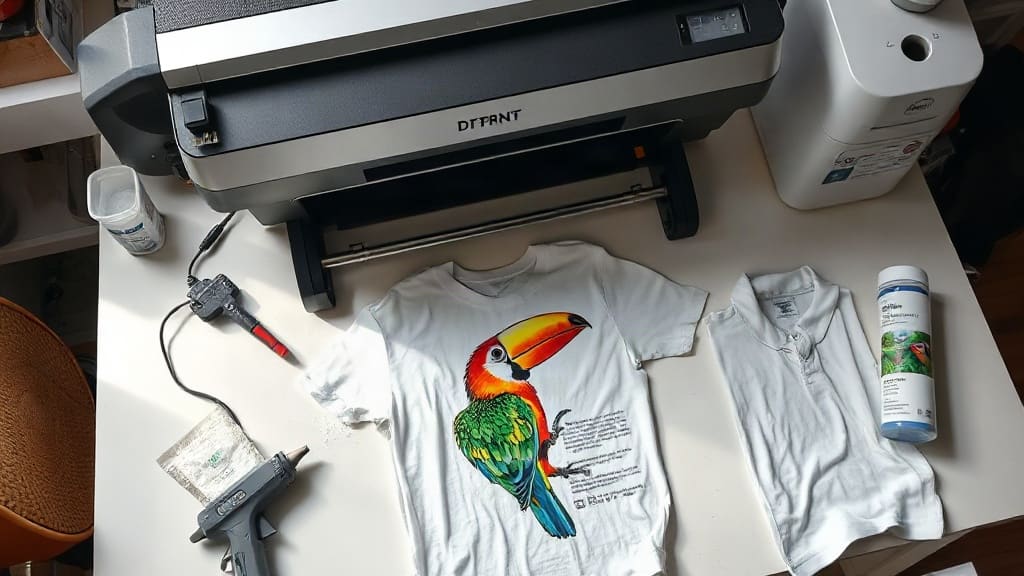
If you’re new to custom apparel, you’ve likely heard about DTF (Direct to Film) printing. It’s a relatively new method that has taken the industry by storm. Unlike traditional screen printing or vinyl, DTF offers a unique combination of versatility and affordability. In this guide, we’ll break down everything you need to know about DTF printing, from the basic process to pro tips that will save you time and money.
What is DTF Printing?
DTF stands for Direct to Film. In simple terms, it’s a printing method where a design is printed onto a special film, coated with adhesive powder, and then heat-pressed onto fabric. The result is a vibrant, durable print that works on a wide range of materials, including cotton, polyester, blends, and even nylon.
The process might sound complicated, but it’s actually quite straightforward. You print your design on a PET film using a special printer and DTF inks, apply adhesive powder, cure the powder, and then transfer the design using a heat press. It’s a one-and-done process, but there are nuances that affect quality.
How Does DTF Printing Work?
Let’s dive deeper into the process. First, you need a DTF printer, which is typically an EPSON or similar inkjet printer modified to handle DTF inks. The inks are pigment-based and come in CMYK plus white. The white ink is crucial because it creates an underbase for the design, ensuring colors pop on dark garments.
Here’s a step-by-step overview:
- Print the design: Using DTF software, you mirror your design and print it onto a release film. The printer lays down white ink first, then colors on top.
- Apply adhesive powder: While the ink is still wet, you cover the printed film with hot-melt adhesive powder. The powder sticks only to the inked areas.
- Cure the powder: You heat the film to melt the adhesive, usually with a heat gun or a curing oven. This ensures the powder is evenly distributed.
- Press: Place the film on your garment with the design facing down, and apply heat and pressure with a heat press. After a few seconds, peel the film off, and your design is transferred.
It’s a fascinating process that eliminates the need for weeding (unlike vinyl) and screens (unlike screen printing). That’s why many small businesses are making the switch.
Why Choose DTF Over Other Methods?
When you compare DTF to other printing methods, several advantages stand out. First, it’s incredibly versatile. You can print on almost any fabric, including tricky materials like nylon or spandex, without worrying about dye migration. Second, the prints are stretchy and durable, perfect for activewear.
Another major benefit is the color accuracy and detail. Since it’s digital printing, you can produce complex, full-color designs with gradients and fine lines that would be challenging with screen printing. Plus, there’s no minimum order quantity, so you can print a single item cost-effectively, which is ideal for on-demand businesses or personal projects.
Compared to DTG (Direct to Garment), DTF is faster for batches and doesn’t require pre-treatment on every garment. It also works better on dark fabrics because the white ink base is applied on the film, not directly on the shirt.
What Do You Need to Start DTF Printing?
Starting your own DTF setup requires some initial investment. Here’s a checklist of essential equipment and materials:
- DTF printer: A modified inkjet printer (usually EPSON L1800 or XP-15000) with a continuous ink system. Many brands offer ready-made DTF printers.
- DTF inks: Pigment inks with high opacity white. Quality matters; cheap inks lead to cracking or washout issues.
- PET films: Specifically designed for DTF, they have a coating that holds the ink and releases smoothly during transfer.
- Adhesive powder: Hot-melt powder that activates at around 120°C (250°F). Choose a fine or coarse powder based on your design.
- Heat press: A clamshell or swing-away press with adjustable pressure and temperature. You’ll also need a heat gun or curing oven for the powder.
- Software: RIP software to control printing and manage color profiles.
If you’re just testing the waters, you might consider using a service provider that prints DTF films for you. This way, you only need a heat press to apply the transfers. Many Etsy sellers and print shops offer custom DTF films.
Pros and Cons of DTF Printing
Like any method, DTF has its strengths and weaknesses. Let’s be honest about them, so you can decide if it’s right for you.
Pros
- Works on a wide range of fabrics, including blends and synthetics.
- No weeding, no screens, quick setup.
- Excellent color vibrancy and fine details.
- Cost-effective for small runs and one-offs.
- Durable and stretchable prints.
Cons
- Initial equipment cost can be high (around $2,000 to $5,000 for a decent setup).
- Learning curve for color management and powder application.
- White ink management can be finicky; it tends to clog if not used regularly.
- Prints have a slight film-like texture, though newer films are improving.
- Not ideal for very large production runs compared to screen printing.
Weigh these factors based on your needs. If you’re just starting a small apparel brand, DTF might be your best bet.
Tips for Perfect DTF Transfers
Getting great results isn’t just about having the right gear. Here are practical tips that I’ve learned from experience:
- Calibrate your printer: Use a color profile that matches your ink and film. Test prints are essential.
- Handle white ink carefully: Shake the ink cartridges regularly and run a nozzle check daily to prevent clogging.
- Apply the right amount of powder: Too little causes peeling; too much creates a thick, rubbery feel. Start with a fine powder and adjust.
- Press with the correct settings: For most garments, 160°C (320°F) for 10-15 seconds with medium pressure works well. Test on scraps first.
- Use a Teflon sheet: Place it over the film during pressing to protect the design and ensure even heat.
Also, remember to peel the film while it’s still hot for a matte finish, or cold for a glossier look. Experiment to find what you prefer.
Common Mistakes and How to Avoid Them
When starting with DTF, you’ll likely encounter a few issues. Here are the most common and their fixes:
- Poor adhesion: If the design peels off, you might not be applying enough pressure or the powder isn’t cured properly. Increase press time or temperature slightly.
- Cracking: This happens when the film is overstretched or the adhesive is not evenly applied. Make sure you cure the powder thoroughly before pressing.
- Dull colors: Often due to insufficient white ink underbase. Increase the white ink opacity in your software settings.
- Ghosting: If the design looks blurry, you might have moved the film during pressing, or the powder was applied too thick. Use a stable press and even pressure.
Remember, practice makes perfect. Keep a log of your settings and results to refine your process.
DTF vs. DTG vs. Screen Printing: Which One Is Right for You?
It’s easy to get overwhelmed with all the acronyms. Let’s clarify when to choose each:
- DTF: Best for small to medium orders, complex designs, and a variety of fabrics. Perfect for on-demand and personalized items.
- DTG: Ideal for single garments with high detail, especially 100% cotton shirts. But it requires pre-treatment and doesn’t work as well on dark or synthetic fabrics.
- Screen printing: The go-to for large bulk orders because the per-unit cost drops significantly. But setup is expensive and time-consuming.
If you’re a small business or hobbyist, DTF offers the best balance of flexibility and affordability. As you grow, you might combine methods.
Cost Considerations and ROI
Many people ask, “Is DTF printing profitable?” The answer is yes, if you manage your costs. Let’s break down the numbers.
A typical DTF transfer might cost you around $1.50 to $3.00 in raw materials (film, ink, powder) for a 10x12 inch design, depending on your prices. You can sell a custom shirt for $25 to $40, so your profit margin is substantial, even after accounting for labor and overhead.
For a small setup, your initial investment might be around $3,000. If you sell just 10 shirts a week with a $10 profit each, you’ll break even in about 6 months. That’s a reasonable return for a side hustle.
To maximize your ROI, focus on niche markets like pet apparel, sports teams, or custom gifts. And don’t forget to market your services locally and online.
FAQs About DTF Printing
Can DTF prints survive washing?
Yes, DTF prints are quite durable if the transfer is done correctly. They can withstand dozens of washes without fading or cracking, especially if you use quality materials and follow proper curing times. Always recommend washing garments inside out in cold water to prolong the print life.
What is the maximum number of colors in DTF printing?
Since DTF is a digital process, it can produce millions of colors using CMYK plus white. There’s no limit like in screen printing. You can print gradients, photos, and highly detailed artwork without extra cost.
Is DTF printing eco-friendly?
Compared to screen printing, DTF generates less waste because there are no screens to clean or emulsions to dispose of. The primary waste is the release film, but many DTF films are now recyclable. Also, water-based DTF inks are available, which are more environmentally friendly than plastisol inks.
Can I use DTF transfers without a heat press?
Technically, you can use a home iron, but it’s not recommended. A heat press provides even pressure and temperature, which are crucial for a smooth, long-lasting transfer. If you use an iron, you might get uneven results and peeling.
Do I need a special printer for DTF?
Yes, you need a printer that can handle DTF inks, especially the white pigment. You can convert some Epson printers, but it’s safer to buy a dedicated DTF printer. They come with proper ink circulation systems to prevent clogging.
Conclusion
DTF printing has opened up a world of possibilities for custom apparel creators. Whether you’re making shirts for your own brand, offering printing services, or just exploring a new hobby, understanding DTF gives you a significant edge. The process is straightforward, the results are professional, and the potential for creativity is endless.
Remember to invest in good equipment, practice your technique, and stay updated with the latest materials. With time, you’ll produce stunning garments that delight your customers. If you have any more questions, feel free to ask in the comments below. Happy printing!