
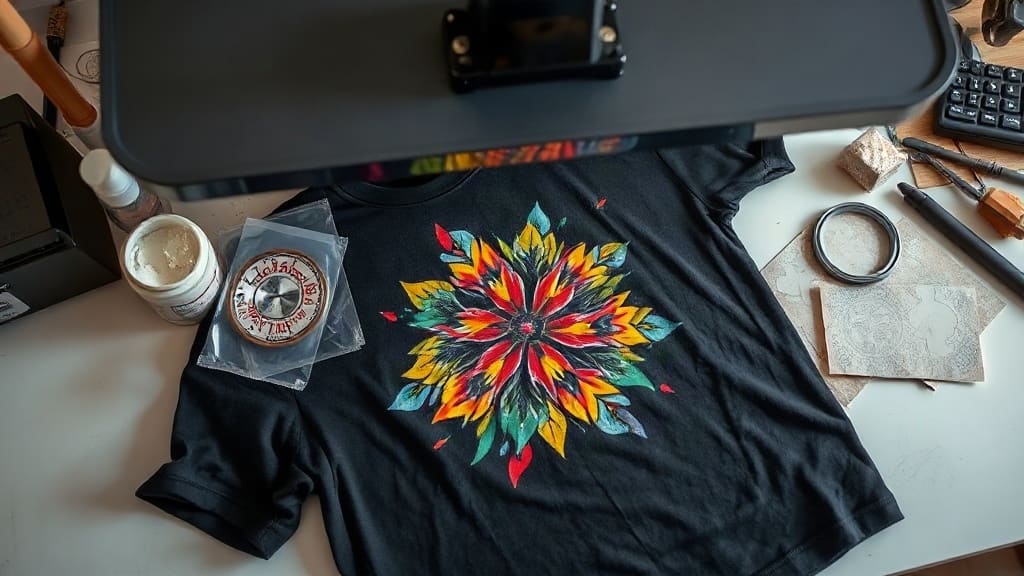
DTF transfers have taken the custom apparel world by storm, offering a versatile and cost-effective way to create high-quality prints on a wide range of fabrics. Whether you're a small business owner looking to expand your product line or a hobbyist eager to try something new, understanding this technology can give you an edge. In this guide, we'll walk you through everything from the basics to advanced tips, so you can start producing stunning garments with confidence.
What Are DTF Transfers?
DTF stands for Direct to Film. It's a printing method where a design is printed onto a special film, coated with adhesive powder, and then heat-pressed onto fabric. Unlike other techniques that print directly onto the garment, DTF creates a transfer that you apply later. This process allows for incredible detail and vibrant colors, even on dark fabrics.
How DTF Transfers Work: Step-by-Step
Understanding the process helps you appreciate the technology and troubleshoot if needed. Here's a breakdown:
- Design Creation: Your artwork is prepared in a compatible format, usually with a RIP software that manages color and print settings.
- Printing: The design is printed onto a PET film using a DTF printer, which uses CMYK plus white ink. The white ink acts as a base to keep colors bright on dark shirts.
- Powder Application: While the ink is still wet, a hot-melt adhesive powder is applied to the film. This powder sticks to the ink.
- Curing: The film is passed through a heat source to melt the powder, forming a strong adhesive layer.
- Transfer: The film is placed on the fabric, and a heat press applies pressure and heat, bonding the design to the garment.
- Peeling: After cooling, the film is peeled away, leaving the print on the fabric.
Why Choose DTF Transfers?
There are several reasons why DTF has become so popular:
- Versatility: Works on cotton, polyester, blends, denim, and even leather. Great for various products like t-shirts, hoodies, bags, and more.
- Durability: Prints are stretchy and withstand many washes without cracking or fading.
- Vibrant Colors: The white base ensures colors pop, and you can achieve photo-quality details.
- No Weeding: Unlike vinyl, there's no tedious weeding of small pieces. Complex designs are transferred in one piece.
- On-Demand: Print only what you need, reducing inventory and waste.
- Cost-Effective: Set-up costs are lower than screen printing for small runs, making it ideal for startups.
DTF Transfers vs. Other Methods
How do DTF transfers compare to alternatives like screen printing, vinyl, or sublimation? Let's see.
DTF vs. Screen Printing
Screen printing is excellent for large orders with simple designs, but setup is expensive and time-consuming. DTF is cheaper for short runs and allows for more colors without extra screens. However, for 100+ shirts, screen printing might be more cost-effective per unit.
DTF vs. Vinyl (Heat Transfer)
Vinyl is limited to cut designs with few colors. DTF can reproduce full-color gradients and photographs easily. Vinyl also requires weeding, which is a pain for intricate shapes. DTF is quicker for multi-color designs, and the final feel is softer.
DTF vs. Sublimation
Sublimation works only on polyester and requires white or light-colored fabrics. DTF works on any fabric and color. However, sublimation bonds with the fabric, giving a permanent, no-extra-layer feel. DTF has a slight hand feel but is more versatile.
Key Considerations for Perfect DTF Transfers
To get the best results, pay attention to these factors:
Printer and Ink Quality
Invest in a reliable DTF printer or ensure your service provider uses high-quality inks. The white ink is crucial for opacity. If it's too thin, colors will be dull; too thick, it may crack.
Film Selection
Not all films are equal. Choose a film that releases cleanly and has good ink adhesion. Some films are designed for specific printers, so check compatibility.
Adhesive Powder
The powder's particle size and melting point matter. Too coarse, and you'll see bumps; too fine, and it may not bind well. A 120-200 micron powder is common for apparel.
Heat Press Settings
Temperature, pressure, and time need to be optimized. Typical settings are 320°F (160°C), medium pressure, for 15-20 seconds. But always test with your specific materials. Too little heat and the adhesive won't activate; too much can scorch the fabric.
Peeling Technique
Whether to peel hot or cold depends on the film and powder. Some recommend hot peeling for a matte finish, cold for glossy. Experiment to see what gives the desired look and durability.
Step-by-Step Guide to Applying DTF Transfers
If you've purchased ready-made DTF transfers or are printing your own, here's how to apply them:
- Pre-press the garment: Press for a few seconds to remove moisture and wrinkles.
- Place the transfer: Position the film with the printed side facing up on the fabric.
- Press: Apply heat and pressure according to the recommended settings.
- Peel: Some transfers are hot-peel, others cold. Follow the instructions.
- Post-press (optional): For extra durability, press again with a Teflon sheet.
Tips for Outstanding Results
- Test first: Always do a test print on a sample fabric to fine-tune settings.
- Use a Teflon sheet: Prevents scorching and keeps the film from sticking.
- Handle with care: Don't stretch the film during placement; it could distort the design.
- Store properly: Keep films in a cool, dry place to avoid moisture affecting the powder.
- Wash care: Advise customers to wash inside out in cold water and avoid bleach.
Common Mistakes to Avoid
Even pros slip up sometimes. Watch out for these pitfalls:
- Incorrect white ink underbase: Too little leads to faded colors; too much causes cracking.
- Poor powder coverage: Uneven application results in weak adhesion or rough texture.
- Wrong peeling temperature: If you peel too early, the design may stretch; too late, it may stick to the film.
- Overlooking fabric type: Some fabrics require lower temperatures or extra pressure.
DTF Transfers for Business: Pros and Cons
If you're thinking of using DTF for your business, weigh these:
Pros
- Low startup cost compared to screen printing.
- Fast turnaround for small orders.
- No minimum order quantities, so you can offer custom one-offs.
- Wide range of products.
Cons
- Per-unit cost is higher than screen printing for bulk.
- Printing can be slower for large runs.
- Need to manage film and powder inventory.
- Possible learning curve for perfecting settings.
Frequently Asked Questions
How many washes do DTF transfers last?
With proper application and care, DTF prints can last for many washes, often exceeding 50 without noticeable fading or cracking. The durability depends on the ink and powder quality, as well as the washing conditions. Using cold water and turning the garment inside out helps extend the life.
Can DTF transfers be used on any fabric?
DTF is highly versatile and works on cotton, polyester, nylon, denim, leather, and blends. However, for very stretchy fabrics like spandex, you might need special elastic powders. Always test on a small area first to ensure adhesion.
Do I need special equipment to apply DTF transfers?
Yes, a heat press is essential for applying DTF transfers because it provides consistent pressure and temperature. A home iron is not recommended as it won't achieve the required heat distribution or pressure, leading to poor adhesion.
What's the difference between DTF and DTG?
DTG (Direct to Garment) prints directly onto the fabric using an inkjet printer. DTF prints onto film first. DTF offers more versatility in fabrics, doesn't require pre-treatment for cotton, and can be applied to dark garments without extra layers. DTG is better for very soft, breathable prints on cotton but is limited to light-colored garments unless you have a white ink printer.
Can I print my own DTF transfers at home?
Yes, you can purchase a DTF printer setup that includes a printer, film, powder, and curing equipment. Starter kits are available for around $2000, making it accessible for small businesses. However, there is a learning curve, and you'll need to maintain the printer and manage consumables. Alternatively, many online services offer custom DTF transfers that you can order and apply yourself.
Final Thoughts
DTF transfers are a fantastic option for creating custom apparel quickly and affordably. Whether you're just starting or looking to add a new service, this method offers flexibility and quality that's hard to beat. By understanding the process, investing in good materials, and following best practices, you can produce professional-looking garments that your customers will love. So, give DTF a try and see how it transforms your printing game.