
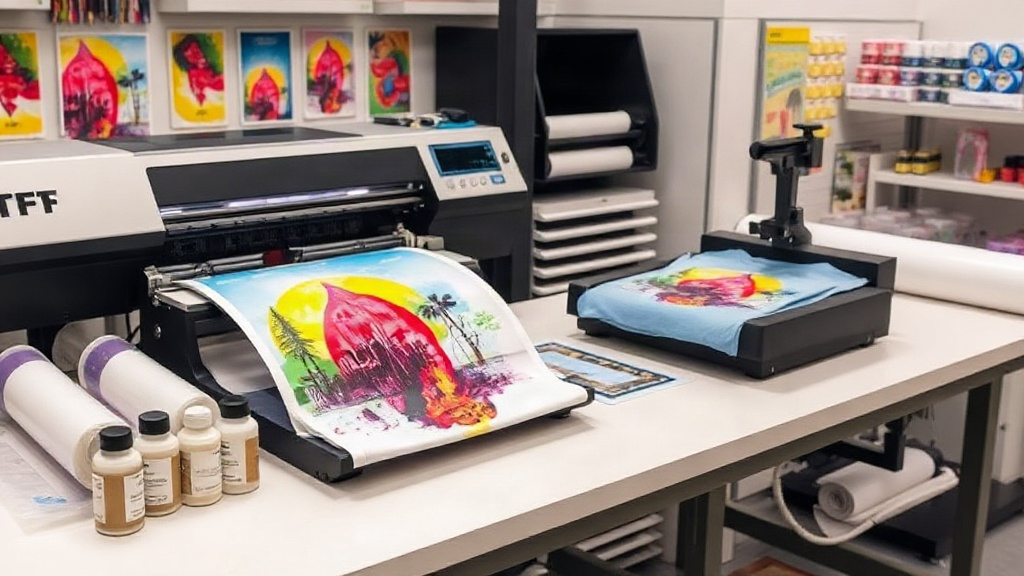
If you're in the custom apparel business, you've likely heard about DTF printing. This technology has been gaining massive popularity, and for good reason. Unlike traditional methods, DTF (Direct to Film) printing offers unparalleled versatility, vibrant colors, and durability. Whether you're a small print shop owner or a DIY enthusiast, understanding DTF printing can open up new possibilities for your projects. In this guide, we'll dive deep into what DTF printing is, how it works, and why it might be the perfect solution for your custom apparel needs.
What is DTF Printing?
DTF printing, or Direct to Film printing, is a relatively new digital printing technology that involves transferring a design onto a special film, then applying it to fabric using a heat press. The process starts with printing your design onto a PET film using specialized DTF inks. A powder adhesive is then applied to the wet ink, and the film is cured. Finally, the design is transferred onto the fabric with heat and pressure. This method works on a wide range of fabrics, including cotton, polyester, blends, and even nylon, without the need for pre-treatment.
How Does DTF Printing Differ from DTG and Screen Printing?
DTG (Direct to Garment) printing requires pre-treatment and works best on 100% cotton. Screen printing is cost-effective for large orders but involves lengthy setup and is limited to one color per screen. DTF printing, on the other hand, requires no pre-treatment, works on almost any fabric, and is ideal for small to medium orders with full-color designs. It also produces a soft feel and excellent wash durability.
Why Choose DTF Printing?
There are several compelling reasons to consider DTF printing for your custom apparel business.
- Versatility: Works on cotton, polyester, blends, nylon, and even leather. No need to stock multiple types of apparel.
- No Pre-treatment: Saves time and avoids the mess of chemical pre-treatments.
- Vibrant Colors: DTF inks produce bright, opaque colors that stand out.
- Durability: Prints withstand repeated washing without fading or cracking.
- Cost-effective for Short Runs: No setup fees, making it perfect for one-off custom items.
- Soft Feel: The transfer is thin and flexible, providing a comfortable wear.
Understanding the DTF Printing Process
To get the best results with DTF printing, it's essential to understand each step of the process.
Step 1: Design Preparation
Create your design using graphic software like Photoshop or Illustrator. Ensure it's in CMYK color mode and at a high resolution (300 DPI recommended). Remember to mirror the image before printing, as the transfer will be flipped.
Step 2: Printing onto Film
Load the DTF film into your printer, ensuring the coated side faces the print head. Use high-quality DTF inks and set your printer to the appropriate settings for film printing. Print the mirrored design onto the film.
Step 3: Applying Adhesive Powder
While the ink is still wet, sprinkle DTF adhesive powder evenly over the printed area. Shake off excess powder. This powder will melt during curing and act as a glue when transferring.
Step 4: Curing the Film
Place the film in a curing oven or under a heat press at around 160°C (320°F) for 2-3 minutes, or until the powder melts and becomes glossy. Alternatively, use a heat gun, but be careful not to overheat.
Step 5: Transferring to Fabric
Preheat your heat press to 160-170°C (320-340°F). Place the cured film on the fabric with the design facing up. Press for 10-15 seconds with medium pressure. Peel the film off while it's still warm (warm peel) or after it cools (cold peel), depending on the film type.
Common Challenges and Solutions in DTF Printing
Even with a straightforward process, you might encounter some issues. Here's how to troubleshoot them.
Ink Not Adhering Properly
If the ink peels off after washing, it could be due to insufficient powder, under-curing, or inadequate pressure during transfer. Ensure you apply enough powder and cure the film completely. Also, check your heat press pressure.
Colors Look Dull
Dull colors often result from low-quality inks or incorrect printer settings. Use reputable DTF inks and ensure your printer is set to the correct color profile. Also, make sure the film is not expired.
Film Sticks to Fabric
If the film sticks and is hard to peel, it might be because the transfer was too hot or the film wasn't cured properly. Try adjusting the temperature or cooling the transfer before peeling.
DTF Printing vs. Other Methods: A Quick Comparison
Let's compare DTF printing with DTG and screen printing to help you choose the right method.
- DTF: No pre-treatment, works on many fabrics, great for small runs, vibrant colors, durable.
- DTG: Requires pre-treatment, best on cotton, good for small runs, softer feel but less durable.
- Screen Printing: Setup costs, best for large runs, limited colors, very durable, can be stiff.
Getting Started with DTF Printing
If you're convinced that DTF printing is for you, here's what you need to start.
- DTF Printer: A dedicated printer that uses DTF inks. Some modified Epson printers work well.
- DTF Inks: High-quality pigment inks designed for DTF.
- DTF Film: PET film with a special coating.
- Adhesive Powder: Hot melt adhesive powder.
- Curing Oven or Heat Press: For curing the film.
- Heat Press: For transferring the design.
- Design Software: For creating and preparing designs.
Start with a small setup and scale as you grow. There are many online resources and communities to help you learn.
Frequently Asked Questions
What fabrics can I use with DTF printing?
DTF printing works on a wide range of fabrics, including cotton, polyester, cotton-poly blends, nylon, leather, and even some synthetic materials. It's one of the most versatile printing methods available.
How durable is DTF printing?
When applied correctly, DTF prints are highly durable. They can withstand 50+ washes without significant fading or cracking. Proper curing and transfer are key to longevity.
Do I need to pre-treat fabric for DTF printing?
No, one of the biggest advantages of DTF printing is that it requires no pre-treatment. This saves time and avoids the use of chemicals.
Can I use DTF printing for small orders?
Absolutely! DTF printing is cost-effective for small orders because there are no setup fees. It's perfect for one-off custom items or small batches.
What is the cost of DTF printing?
The cost varies depending on the size of the design and the materials used. However, for short runs, DTF is often more affordable than screen printing. The initial investment in a printer and supplies can be recouped quickly.
Conclusion
DTF printing is a game-changer for custom apparel. Its versatility, ease of use, and durability make it an excellent choice for businesses and hobbyists alike. By understanding the process and investing in the right equipment, you can produce high-quality, vibrant prints that your customers will love. So why not give DTF printing a try? Your custom apparel business might just reach new heights.